ProZ.com frequently asked questionsTerminology/term help Main Main
1 - Terminology/term help 2 - KudoZ
2.1 - KudoZ: general 1.1 - Mis on KudoZ? KudoZ on terminiabi võrgustik. KudoZ'i kaudu saavad ProZ.com'i kasutajad pakkuda üksteisele ja külastajatele tasuta abi raskete terminite tõlkimisel. Et rohkem teada saada, vaadake meie Flash-formaadis sissejuhatust. 1.2 - Glossary of KudoZ terms
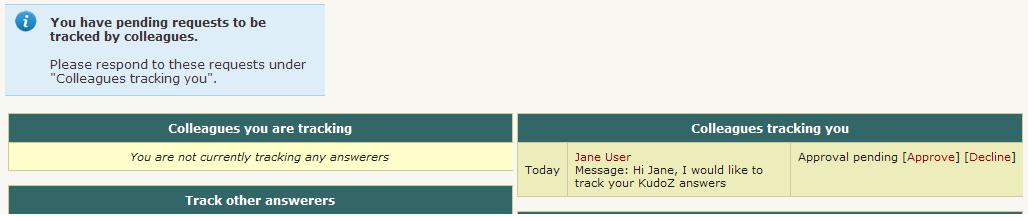
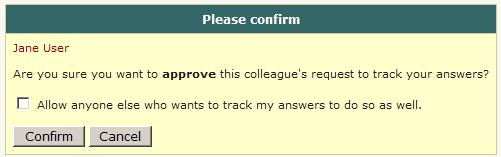
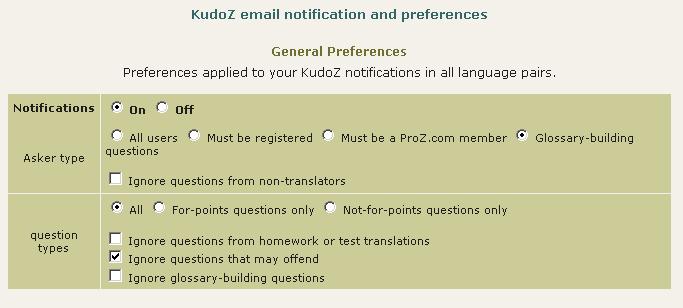
1.3 - Kuidas see toimib? KudoZ'i "tehing" koosneb kolmest sammust: 1.4 - Mis kasu on KudoZ'i punktidest? Mõned kliendid kasutavad KudoZ'i punkte, et teha kindlaks tõlkijate kvalifikatsiooni. Loogika seisneb selles, et kui vajate meditsiini valdkonda tundva tõlkija teenuseid, tasub otsimist alustada inimesest, kes on saanud meditsiinialastele küsimustele vastamisel 300 punkti. 1.5 - VASTAMINE: Kuidas KudoZ'i punkte uuendatakse? Veebilehel mõnes kohas näidatavaid KudoZ'i punktide koguarve uuendatakse üks kord päevas, mõnes kohas näidatavaid aga uuendatakse reaalajas. Seega võib esineda ajutisi erinevusi, kuid need parandatakse, kui kõik punktid üks kord päevas kokku loetakse. 1.6 - Do I earn any KudoZ points by answering KudoZ questions? No. KudoZ points are only earned if one of your answer to any KudoZ question is selected by the asker or automatically by the system based on peer agreement. 1.7 - Millised on KudoZ'is osalemise reeglid? Vt KudoZ'i reeglid: Üldreeglid, Küsimise reeglid ja Vastamise ja kolleegi kommentaaride esitamise reeglid 1.8 - Can friends, family members or close associates participate in my KudoZ questions or answers? Participation in KudoZ questions, particularly using the peer comment system to "boost" an answer, or in asking and answering to gain KudoZ points, should not be carried out among the profiles of friends, family or close associates, in order to maintain a certain level of transparency in the KudoZ arena. In cases where interacting profiles are shown to be of this type, a mutual block may be applied to the profiles (this blocks the interaction between specific profiles only, not participation in KudoZ at large) to ensure fairness. 1.9 - VASTAMINE: Mida peaksin tegema, kui KudoZ'i reegleid rikutakse? Kui KudoZ'i reegleid rikutakse, peaksite teatama sellest vastava keelepaari moderaatorile. Moderaatorite nimekiri on saadaval siin. 1.10 - Millisel loogikal põhinevad KudoZ'i kategooriad? KudoZ'i küsimusi saab jagada kategooriateks umbes 100 kirjet sisaldava valdkondade nimekirja alusel. See nimekiri, mis on loodud statistiliselt ProZ.com'i kasutajate poolt sisestatud tekstides sisalduvate valdkondade põhjal, on taotluslikult mõnevõrra ebamäärane. Näiteks kuna üks liige võib mõelda 'sõiduauto', samas kui mõni teine mõtleb "autod", sisaldab nimekiri mõlemat kategoorianimetust. 1.11 - Mis juhtub, kui küsimust ei hinnata? Kui küsimusele on vastatud, kuid seda pole kolme päeva jooksul suletud, saadetakse küsijale meili teel meeldetuletus hindamiseks. Kui küsimus jääb avatuks ka pärast nelja niisuguse teate saatmist (2 nädala jooksul), püütakse parim vastus automaatselt valida. 'Automaase hindamise robot' teeb valiku kolleegide poolt igale vastusele antud 'nõustumiste' koguarvu põhjal vastavalt järgmistele reeglitele: 1.12 - Are askers able to close a question without awarding points? Yes. An asker may choose to do this when s/he has asked a question in error (misspelled term, etc.), when no answer was deemed helpful, when a better term was found elsewhere (and no answer was deemed helpful), or in other cases. 1.13 - How often do askers close questions without awarding points? Less than 5% of the time. 1.14 - Kust leian oma varasemate küsimuste ja vastuste loetelu? Minge oma profiili lehele ja klõpsake vahekaardile KudoZ. Liikmed näevad siin ka suvandit, millega saab oma KudoZ'i punkte uuendada. 1.15 - Can I see questions in language pairs not reported in my profile? Yes. You can see KudoZ questions in all language pairs by clicking on See more languages in the KudoZ questions page. 1.16 - Millistel tingimustel eemaldatakse KudoZ'i küsimus? KudoZ'i küsimuste kõrvaldamiseks ("summutamiseks") on umbes kümme võimalikku põhjust. Nende põhjuste kohta vt seda artiklit. 1.17 - What information can I see about a KudoZ asker? If you move your mouse over the asker's picture in a KudoZ question you will see a mouse-over message similar to the one pictured below: 1.18 - Mida teeb nupp "Hääleta PRO" või "Hääleta non-PRO"? PRO-küsimusena märgitud KudoZ'i "abi" küsimuse puhul võivad osalejad hääletada selle poolt, et märkida küsimus kui non-PRO, ja vastupidi. Küsimuse ümberliigitamiseks on vaja kolm häält kas PRO või non-PRO poolt. 1.19 - When posting my question I selected by mistake the wrong level (PRO, non-PRO). What can I do? You should submit a support request to have this issue addressed by staff. 1.20 - VASTAMINE: Minu arvates oleks minu punktide koguarv pidanud täna rohkem tõusma. Kui olete liige, saate sundida süsteemi oma punkte reaalajas uuendama. Minge KudoZ'i punktide kokkuvõtte lehele ja klõpsake "Uuenda punktide koguarvu nüüd". Kui olete registreeritud kasutaja, korrigeeritakse mis tahes erinevus teie punktide koguarvus 24 tunni jooksul. 1.21 - VASTAMINE: Üks mu KudoZ'i punktide koguarve langes. Kuidas on see võimalik? On võimalik, et valitud punktide koguarv (üldine, PRO, valdkonna või perioodi kaupa) langeb. Seda võivad põhjustada järgmised tegurid: 1.22 - VASTAMINE: Kuidas saan muuta oma profiili lehel olevas KudoZ'i punktide kokkuvõttes ilmuvaid asju? Kasutajad saavad soovi korral mõnda tüüpi KudoZ'i punktid oma kokkuvõttes peita, minnes järgmisele leheküljele: http://www.proz.com/pro/?show_mode=kudoz&sub_mode=summary 1.23 - What do the "ok" and "no" under the the "Gloss" (glossary) column in my KudoZ activity section indicate?
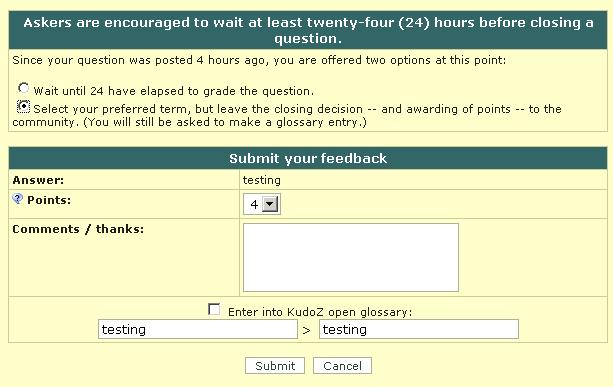
1.24 - VASTAMINE: Pidin looma uue profiili. Kas saan ühendada selle ja eelmise profiili punktid? Jah, kui olete liige, saab tugipersonal seda teha. Pange tähele, et ühendatakse mitte ainult punktid, vaid kogu KudoZ'i ajalugu (küsimine, kolleegi kommentaarid, märkused jne). Te ei pääse enam vanale profiilile ligi. 1.25 - Kuidas saan vältida seda, et ProZ.com'i terminiotsing translitereerib diakriitilisi ja rõhumärke? Mõningatel juhtudel pakub ProZ.com'i terminiotsing piiratud võimalust translitereerida diakriitilisi ja rõhumärke (nt kui otsite terminit "publica", võivad tulemused sisaldada ka terminit "pública"). Selle funktsiooni keelamiseks valige "otsi täpset fraasi". 1.26 - How can I enter a discussion entry? To enter a discussion entry you should click on the "Post discussion" button. A form will show to allow you to post a title and the body of your entry. These fields are limited to 50 and 1200 characters respectively (there is a counter to tell you how many characters you have left for the main field). There is a preview option and buttons for submitting the entry and for canceling the operation. 1.27 - Panen ette, et KudoZ'is osalemine tehtaks tasuliseks. See tõstaks kvaliteeti. Meil ei ole praegu kavas piirata KudoZ'i kasutamist ainult liimetele. On aga võimalus seada vaatamise ja teadete eelistused nii, et näete ainult liikmete esitatud küsimusi. Lisaks on küsides võimalik märkida ära eelistus, et vastajad oleksid liikmed. 1.28 - Are KudoZ questions indexed by search engines? Yes. As with the public forums, KudoZ questions are indexed by search engines. 1.29 - What do the time references next to the confidence level and in the peer section indicate? They indicate the time elapsed from the moment the question was asked until the other action "answer", "peer comment" took place. The times shown are measured in relation to moment the question was asked. 1.30 - Can the asker enter in the glossary a term different from the one suggested in the selected question? Yes. Points are (or should be) given to the most helpful answer, while the best possible term should be entered in the glossary, even if it was not suggested by the answerer who won the points. 1.31 - A user in my sub-community regularly posts bad answers and they are sometimes selected and I am concerned that the glossary will deteriorate. Many valuable colleagues are of the same opinion and several of them have abandoned KudoZ. What can be done? The system includes the "disagree" feature. If answers considered invalid receive several disagrees based on linguistic (not personal) comments, then the amount of "bad" answers is likely to be reduced. 1.32 - I was the first to provide the right answer to a KudoZ question and then other user provided the same answer adding few more explanations and received the points (instead of agreeing to my answer). Is this allowed? Askers have the right to select the answers they consider most helpful to their questions. 1.33 - How does the first validated answer mode work? Askers have the option of asking questions in "first validated answer" (FVA) mode. When the FVA option is selected, instead of multiple answers being submitted and the asker selecting the one that is most helpful, the goal is for one correct translation to be agreed upon by the answerer community. An FVA question is therefore considered closed as soon as one answer gets two net agrees (in top pairs, two net agrees must come from users who meet the criteria for the question). 1.34 - What are AI-generated KudoZ answers? AI-generated KudoZ answers are automatic answers generated by AI technology, in this case, by ChatGPT. This answers are marked as such within the answer itself. 1.35 - How are AI KudoZ answers generated? Most AI technology brings information back by means of prompts. Think of prompts like instructions you give to the AI. When you ask a question or tell it something, that's your prompt. In order to generate a KudoZ answer, we send ChatGPT three different prompts: one to get a proposed translation of the source term taking into account the information supplied by the asker (languages, fields, contect), one to obtain an explanation of the proposed translation that also includes sample sentences, and a last one to get confidence level information (i.e. to know how confident the AI feels about its proposed translation). Once this information is returned by the AI, a KudoZ answer is automatically built with it and posted together with the question (provided the asker has selected the AI-generated answer option). 1.36 - Who posts AI-generated answers? AI answers are generated and posted automatically when an askers select this option in the KudoZ question form: 1.37 - Are askers notified of AI-generated answers to their questions? No. For the time being, no email notification is sent for AI-generated answers. 1.38 - Can KudoZ participants peer grade AI-generated answers? Yes, KudoZ participants are encouraged to agree or disagree (or remain neutral) with AI-generated KudoZ answers. Peer grades will count in the case of automatic grading. Click here for details about automatic grading. 1.39 - Can KudoZ askers select AI-generated answers as the most helpful and award points to the AI? Yes, KudoZ askers can select an AI-generated answer as the most helpful one and award KudoZ points to the AI. These KudoZ points, however, will not be used to rank the AI profile in the directory. Click here to learn how KudoZ points count for directory ranking. 1.40 - Do KudoZ points “earned” by the AI count for directory ranking? No. KudoZ points awarded to the AI for KudoZ answers selected as the most helpful will not count for directory placement. 1.41 - What is the purpose of adding AI to KudoZ? The integration of AI into term help is thought as a supporting feature. If AI technology is available out there and language professionals are using it (in many different ways), why not include it in KudoZ and enable them to realize their full potential? ProZ.com provides tools and opportunities to its members. This is just another one of many. Click here to see a full list of membership benefits. 2.2 - Asking 2.1 - Mis hõlmab "terminiabi" reeglis http://www.proz.com/siterules/kudoz_general/1.1#1.1 toodud määratluse põhjal? KudoZ'i küsimuste kaudu saab küsida abi terminite või idiomaatiliste väljendite alal. 2.2 - What is the meaning of "one term is allowed per question" in KudoZ rule 2.1? Unless they share a root or are otherwise related, terms should be posted separately--an asker should not ask how to say "apple" and "banana" in the same question. This means that a question such as "flotsam/jetsam/derelict" in a context of maritime law would be not valid, since the terms are independent and should posted in three separate questions. On the other hand, "the flotsam and jetsam of the inner city" would be OK, as the terms flotsam and jetsam are related in a unit of meaning. Other examples of valid KudoZ questions are: "screen / screening" (they share a root), "Many levels in this game were heavily tuned for smoothness" (terms related as a unit of meaning in a particular context). 2.3 - KÜSIMINE: Kas minu küsitavate küsimuste arvule on mingi piirang? Jah. Teie päevane limiit (mõõdetuna nihkuva 24h perioodi jooksul) sõltub teie liikmelisuse tasemest. Kui te pole ProZ.com'is registreerunud, saate küsida ühe (1) küsimuse päevas. Kui olete registreerunud, aga mitte liige, saate küsida viis (5) küsimust. Kui olete liige, saate küsida viisteist (15) küsimust. On ka limiidid 20 küsimust nädalas registreerunud mitteliikmetele ja 60 küsimust liikmetele. Kui teil on kümme (10) küsimust, millel on korralikud vastused ja mis on olnud avatud rohkem kui nädala, ei saa te uusi küsimusi küsida. Palun hinnake ja sulgege need küsimused, et saaksite küsimist jätkata. 2.4 - What happens if I ask questions beyond the daily or weekly limits? When you ask questions beyond the limits corresponding to your membership status, these extra questions are added to the KudoZ question queue and they will be made visible automatically when enough time has elapsed for the question to be within asking limits. 2.5 - KÜSIMINE: Hoian oma terminitealased küsimused tavaliselt projekti lõpuks. Kas on võimalus limiidist mööda pääseda? Oleme veendunud, et limiit viisteist (15) küsimust päevas peaks olema enamiku inimeste jaoks piisav. Näiteks kui jagate oma küsimused projekti kahele viimasele päevale, saate küsida kolmkümmend (30) küsimust. Kui tahate küsida rohkem ning olete liige, võite paluda tugipersonalilt ajutist erandit. 2.6 - Can I post a question in more than one language pair? It is not possible to post a single question in different language pairs. However, several questions in different language pairs may be posted for a single term. 2.7 - KÜSIMINE: Kas saan küsida ükskeelset KudoZ'i küsimust? Jah, kuid KudoZ'is pole selle jaoks eraldi ala. Kui tahate küsida küsimust ainult ühes keeles (nt: inglise-inglise), minge vahekaardil KudoZ valikule Küsi. Blanketil klõpsake 'Näita veel keeli'. Näete kahte nimekirja, kus valige soovitud keel kaks korda. Nii saate ükskeelse küsimuse. 2.8 - KÜSIMINE: Ma pole kindel, kas küsimus tuleks liigitada non-PRO (mitte-PRO) või PRO alla. Milles on vahe? Ehkki siin pole selget piiri, on nende kahe küsimustetüübi kohta kasutusele võetud järgmised määratlused:
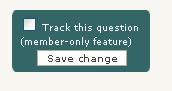
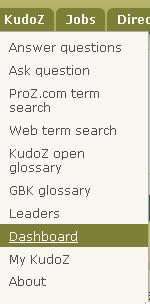
Nende määratluste kasutamisel ärge mõelge oma taustale/erialale, vaid mingile hüpoteetilisele suvaliselt valitud kakskeelsele inimesele. Kas on tõenäoline, et see inimene suudaks kõnealuse termini või fraasi ilma pikemalt mõtlemata hästi ära tõlkida (ning ka konkreetses kontekstis)? Kui ei, siis on see PRO-küsimus. Selle kohta on olemas üks artikkel, kust saab täpsemat teavet. 2.9 - What should I do if I don't have context to include in my KudoZ question? There is always some context to provide, such as information about the type of customer (an oil company? a plumber? a dentist? ), the type of document you are translating, the subject, etc. 2.10 - KÜSIMINE: Kas ma saan lisada oma küsimusele täiendavat teavet? Kas ma saan seda redigeerida? Te ei saa küsimust redigeerida, kuid võite lisada märkusi. Küsimuste lehel ilmub selle jaoks blankett. (Kui te küsimust enam üles ei leia, vaadake linki kinnitusmeilist.) 2.11 - Can KudoZ askers direct their questions to specific site users? Yes. When posting a KudoZ question, askers are given the option to restrict their KudoZ questions by 1) profile information (native language, language pair and field) and 2) membership status. If the asker selects the option "Only ProZ.com members may answer" when posting his/her question, the "Answer" button will not be visible to non-members and the following message will show to them: 2.12 - KÜSIMINE: Kas saan saata oma küsimuse ainult teatud inimestele, keda ma tunnen? Saate seda teha siis, kui olete ProZ.com'i (maksev) liige. 2.13 - KÜSIMINE: Miks peaksin piirama küsimust teatud inimestele? Paljud KudoZ'is küsijad on teada saanud, millistele valdkondadele on konkreetsed ProZ.com'i liikmed spetsialiseerinud. Seepärast eelistavad nad konsulteerida otse nende asjatundjatega. KudoZ'i kaudu toimub see protsess standardiseeritumalt ja mugavamalt ning tagatakse, et pakutud tõlgete kohta luuakse otsitav register. 2.14 - KÜSIMINE: Miks peaksin piirama ligipääsu küsimusele teatud liikmete kategooriatele? Mõnikord soovivad küsijad tagasisidet konkreetsetelt rühmadelt, näiteks mingit keelt emakeelena kõnelejatelt, teatud valdkonnas töötavatelt inimestelt või muudelt ProZ.com'i liikmete kategooriatelt. Selle eelistuse rakendamiseks on olemas vastav funktsioon. 2.15 - KÜSIMINE: Kui küsin privaatse küsimuse, s.t piiran selle ühele oma meeskondadest, siis kas seda näevad ka teised? Kas seda saab arhiividest otsida? Kui olete liige, saate terminit ükskõik kui kaua privaatsena hoida. Kui olete registreeritud kasutaja, saate hoida terminit privaatsena ühe kuu. Pärast seda muutub see avalikuks ja seda saab otsida. 2.16 - I see a "squash" button under a KudoZ question I have posted, what does that mean? If you have posted a KudoZ term help question and it has not received an answer, you will have the option to "squash" or remove the question until it receives at least one answer. This allows users to remove mistakenly-posted questions without the assistance of a moderator or KudoZ editor. 2.17 - KÜSIMINE: Kuidas saan tänada KudoZ'i vastajaid ilma vastuseid praegu tagasi lükkamata või hindamata? Võite klõpsata inimese nimele ja kirjutada talle profiili lehe kaudu. Talle saadetakse siis meil. 2.18 - KÜSIMINE: Kuidas ma oma KudoZ'i küsimust hindan? Oma KudoZ'i küsimuse hindamiseks peate klõpsama lingile "Sellest vastusest on kõige rohkem abi" kõige kasulikuma postituse vastusekastis. Kui klõpsate lingile "Sellest vastusest on kõige rohkem abi", ilmub aken, mille kaudu saate anda KudoZ'i punkte ja sisestada KudoZ'i termini oma sõnastikku, KudoZ'i Avatud Sõnastikku (KAS) või mõlemasse. 2.19 - I did not enter the term to the KOG at the time I graded my question, but I would like to enter it now. How can I do that? Simply click on the "gloss" button below the "Summary of answers provided" chart. 2.20 - Can I grade my question less than 24 hours after posting it? KudoZ rule 2.10 recommends that askers allow at least twenty-four (24) hours to pass before closing a question. 2.21 - KÜSIMINE: Kaotasin oma KudoZ'i kinnitusmeili lingi ära, kuidas ma saan nüüd oma KudoZ'i küsimust hinnata? Kui kaotasite oma KudoZ'i kinnitusmeili lingi ära, saate uue, kui võtate online-piletisüsteemi kaudu ühendust meie toega ja/või võtate ühendust moderaatoriga, et ta saadaks lingi uuesti teie meiliaadressile. Pidage meeles, et kui soovite uut kinnitusmeili, on oluline saata meile oma küsimuse KudoZ'i veebiaadress. 2.22 - KÜSIMINE: Kas saan anda punkte rohkem kui ühele vastusele? Ei, saate valida ainult ühe "kõige kasulikuma" vastuse. Punktide jagamise võimalust vastajate vahel on varem kaalutud, kuid see jäeti kõrvale, kuna sellest poleks kuigi palju kasu ning see teeks punktide haldamise raskemaks ning tekiksid ka probleemid, kui tuleb näiteks jagada neli punkti kolme vastaja vahel. Kasulik nõuanne olukorras, kui te ei suuda vastuse osas otsust teha, on valida välja see, millest oli kõige rohkem abi. Kui on kaks või rohkem samaväärselt kasulikku vastust, võite valida esimese (aja jooksul tekib vastajate jaoks teatud tasakaal) 2.23 - Sulgesin küsimuse ilma parimat vastust valimata. Kas saan küsimuse uuesti avada? Jah, klõpsake nupule AVA. Kui kahtlete, esitage küsimus toele. 2.24 - KÜSIMINE: Kuidas saan sulgeda enda küsitud KudoZ'i küsimuse, millele ei ole veel vastatud? Klõpsake oma küsimuse lehel nupule 'Hinda'. Satute järgmisele lehele, kus klõpsake nupule 'Sulge hindamata'. (hinnang: Mikhail Kropotov) 2.25 - KÜSIMINE: Kuidas ma saan keelata meili teel saadetavad meeldetuletused oma küsimuste hindamiseks? Küsijatele saadetakse meili teel meeldetuletusi nõuetekohaseid vastuseid kogunud avatud KudoZ'i küsimuste hindamiseks pärast 5, 7, 9 ja 11 päeva möödumist alates küsimuse esitamisest. 2.26 - Milliste kriteeriumide alusel peaksin valitud vastustele punkte (1-4) andma? Tehes otsust selle kohta, kui palju punkte anda, võtke aluseks järgmine juhis: 2.27 - Points were awarded to an answer to my question but I would like to select another answer instead. How can I un-grade my question? To un-grade a question you have asked in order to award the points to the answer you found most helpful, you will need to first obtain the agreement of the answerer to whom the points have been given. Both you and the answerer should express this agreement either to the assigned moderator(s), or via support request. 2.28 - I have included confidential information in a question. Can I have it removed? If you posted a KudoZ question that contains confidential information, please submit a support request, specifying the exact information you would like to have remove so that staff can remove this information for you. 2.3 - Answering 3.1 - VASTAMINE: Ma ei näe KudoZ'i küsimust. Mida ma teha saan? Palun saatke lehekülje veebiaadress ja ekraanipilt Proz.com'i toele. 3.2 - VASTAMINE: Kui otsin ainult liikmete esitatud küsimusi, näen midagi imelikku. "Ainult liikmed" valiku kasutamisel (saadaval valiku "küsija tüüp" all KudoZ'i esilehel - http://www.proz.com/kudoz ) kuvatakse küsimused, mille esitasid kasutajad, kes olid *küsimise hetkel* liikmed. Kuna küsijate liikmelisuse kategooriaid hakati ära märkima alles hiljuti, on tulemuste arv väike. Lisaks võib segadusttekitava mulje luua ka asjaolu, et on mitmesuguseid liikmelisuse vorme (täielik, osaline), ning see, et mõned liikmelisused lõppevad. 3.3 - Kui küsimus on suletud ja punktid antud, siis kas ma saan sellele ikka vastata? Kui punktid on antud, küsimus suletakse, kuid vastata saab ka suletud küsimustele. 3.4 - VASTAMINE: Kas ma saan redigeerida vastust, mille olen andnud KudoZ'i küsimusele? Ei. Vastuse redigeerimine oleks teiste vastajate suhtes ebaõiglane. Võite lisada oma vastusele kommentaari. Mõningatel juhtudel saab vastaja vale vastuse peita ja selle asemele õige vastuse üles panna. 3.5 - VASTAMINE: Miks ilmub minu vastusekastides sõna "Peida"? Te võite oma vastuseid peita. Sel viisil saate oma vastuseid tagasi võtta. 3.6 - VASTAMINE: Kuidas saan peidetud vastust jälle nähtavale tuua? Nähtamatuks muudetud vastuseid ei saa enam nähtavaks muuta. Kasutage linki "Peida vastus" üksnes siis, kui soovite vastuse lõplikult nähtamatuks muuta. 3.7 - VASTAMINE: Kui peidan oma vastuse ja esitan uue, siis kas rikun sellega saidi vastamisreegleid? Nii nagu ka rohkem kui ühe vastuse esitamine on ka see vastuvõetav, kui seda tehakse aeg-ajalt. Pidevalt mitme tõlke pakkumine kas siis varasemaid vastuseid peites või mitte on KudoZ'i vastamisreeglite vastane. Vt KudoZ'i vastamisreeglid. 3.8 - Will my hidden answers be visible in my list of answers? You will always be able to see the answers you have hidden in your list of KudoZ answers. Other users will only see your hidden answers if you have hidden 10% or more of your total answers (but no less than 20 answers). 3.9 - What is the meaning of "no more than one answer per question" in KudoZ rule 3.1? Submitting an answer to a KudoZ question and then submitting one or more additional answers to the same question is discouraged (even if the original answer was hidden) and doing this in a systematic way is forbidden by the rules. Answerers can add as many comments as they want to their answers. Offering several terms together in the same answer (ANSWER1/ANSWER2/ANSWER3) is not forbidden, but discouraged, as it interferes with the glossary format. 3.10 - VASTAMINE: Mida see tähendab, kui küsimuse juurde on märgitud "Mitte punktide saamiseks"? Mõned kasutajad on veendunud, et KudoZ'i punktide andmine ei ole hea mõte. Sellised kasutajad võivad muuta oma küsimuse "mitte punktide saamiseks" mõeldud küsimuseks. Niisugustele küsimustele vastates ei ole võimalik KudoZ'i punkte teenida. 3.11 - VASTAMINE: Kui vastan "mitte punktide saamiseks" mõeldud küsimustele, siis kas need ilmuvad KudoZ'i ajaloos minu profiili lehel? Jah. Sellised küsimused märgistatakse värviga, mis näitab, et punkte ei olnud. 3.12 - VASTAMINE: Kas "mitte punktide saamiseks" mõeldud küsimustele vastamine parandab minu positsiooni KudoZ'i liidrite edetabelis või ProZ.com'i tõlkijate nimekirjas? Ei. "Mitte punktide saamiseks" mõeldud küsimustest saadav kasu ei ole tehniline, vaid üksnes kaudne (õppimine, abi, kolleegide ja partneritega suhtlemine jne). 3.13 - What does Confidence level show? Confidence level is the degree of certainty expressed by an answerer regarding his or her own answer. This information is provided by an answerer in the Kudoz Answer form. Confidence level is a required field and an answerer is suggested to select one of the 5 (five) possible confidence levels: 3.14 - I don't know the answer to a KudoZ question, but I have some information that could help the asker. Where should I post this information? If you cannot think of an appropriate answer to a KudoZ question, but you have information that may help the asker or other participants to come up with a good translation, make a reference post by clicking on "Post reference" and include such relevant information. 3.15 - I do not see the "Post reference" button in a KudoZ question. Why? Once you posted a Kudoz answer, you will not be able to post a reference. It is assumed that you put all the information in your Kudoz answer. This makes your answer a more useful resource, and ensures all the information is kept in one place. 3.16 - Under what conditions can an answerer use the discussion entries feature? Answerers can use the discussion entry to ask the asker for context information or to engage in linguistic discussions of some points of the question asked. In general, opinions on other answers should be provided in the peer grading interface while additional comments supporting their answers should be presented as comments in the answers themselves. Systematic use of the discussion entry to promote an answer provided will not be allowed. 3.17 - How can I avoid answering questions from askers who tend to close their questions without grading them? You can see how many questions an asker has closed without grading by mousing over their name in a KudoZ question they have asked. (There is also an option to filter out questions from certain askers in the lists of questions.) 3.18 - 2.4 - Peer commenting 4.1 - VASTAMINE: Kas saan nõustuda rohkem kui ühe vastusega oma küsimusele? Jah. Nõustuge julgelt kõikide vastustega, mida õigeks peate, ja ärge nõustuge kõikide vastustega, mis on teie arvates valed. 4.2 - VASTAMINE: Mis juhtub, kui keegi ei ole vastusega nõus? Mittenõustumine on tegelikult lihtsalt märguanne küsimuse esitajale, et teie (ja võib-olla ka teised) ei pea vastust õigeks. Küsija otsustab siis ise, kas ta võtab soovitust arvesse või mitte. 4.3 - VASTAMINE: Postitasin kolleegi kommentaari ja tahan vastata saadud vastusele. Kas saan seda teha? Ei. Et KudoZ'i kirjavahetused ei kalduks teemast kõrvale, ei ole mitmed mõttevahetused ühe küsimuse ümber lubatud. Kolleeg võib kommenteerida ja vastaja võib sellele vastata - kuid seal mõttevahetus ka lõppeb. (Võimalus kolleegi kommentaare ja vastuseid redigeerida on mõeldud ainult õigekirja, vigaste linkide vms parandamiseks.) Veenduge, et väljendute selgelt ja konkreetselt; saate ainult ühe võimaluse. 4.4 - Näen linki enda esitatud kolleegi kommentaari "redigeerimiseks/kustutamiseks". Milleks seda kasutatakse? Link "redigeeri/kustuta" annab võimaluse oma kommentaare redigeerida. Palume meeles pidada, et mõeldud on vaid õigekirja ja vigaste linkide parandamist jms muudatuste tegemist. 4.5 - Can I comment on an answerer's confidence level in my peer comment? No. Peer comments should be purely linguistic in nature (see KudoZ rule 3.5). Making comments or insinuations regarding an answerer's confidence level would not be in line with KudoZ rule 3.7. 2.5 - KudoZ editors 5.1 - VASTAMINE: Näen, et mõned kasutajad (mitte moderaatorid) muudavad teiste esitatud küsimuste liigitust või eemaldavad neid. Mille põhjal sellised liikmed valitakse? Moderaatorid võivad anda liikmetele/registreeritud kasutajatele, kellel on vähemalt 500 KudoZ'i punkti, võimaluse lugeda ümberliigitamise ja "summutamise" reegleid ning teha väike test. Need, kes testi ära teevad, saavad õiguse selliseid muudatusi teha. 5.2 - Is site moderation one of the responsibilities of KudoZ editors? No. KudoZ editors are site users who have been given the right to perform some editing functions on KudoZ questions, namely the change or reversion of KudoZ question language pairs, the removal of questions if these are not in line with site rules or if they are duplicated, and the change of KudoZ question fields. 5.3 - VASTAMINE: Ilmus suvand, mis võimaldab mul teiste inimeste küsimusi redigeerida. Miks? Kui saavutate teatud arvu KudoZ'i punkte (500), ilmuvad teatud suvandid, mille kaudu saab teiste postitatud küsimusi parandada. Kui küsimus peaks olema hispaania-inglise suunal, kuid on esitatud küsimusena inglise-hispaania suunal, võite selle ära parandada. 5.4 - I would like to apply to become a KudoZ editor. Can I? No, it is not possible to submit an application to become a KudoZ editor, an invitation has to be issued by a moderator or site staff. 5.5 - Can KudoZ editors reclassify a question form PRO into non-PRO and vice versa? No, KudoZ editors and moderators will have to vote like any other member for the change of status of questions (instead of forcing this change of status.) 5.6 - Does membership determine someone's eligibility to become a KudoZ editor? No, eligibility is not determined by membership status. 2.6 - KudoZ notifications 6.1 - VASTAMINE: Ma ei saa meili teel ühtegi KudoZ'i teadet. Kui te ei saa meili teel üldse KudoZ'i teateid ning pole kunagi saanud, kontrollige seadeid oma profiili lehel. Te ei saa teateid, kui: 6.2 - VASTAMINE: Ma ei saa kõiki KudoZ'i teateid, mida peaksin saama. KudoZ'i küsimuste kohta saadetakse meili teel teateid järgmiste kriteeriumide alusel: keelepaar, valdkond ja raskusaste. Kui te ei saanud mingi küsimuse kohta meili teel teadet, veenduge, et teie profiili seaded ja eelistused on sellised, et oleksite pidanud teate saama. Kui olete veendunud, et on, esitage palun vastav tugiteenuse taotlus, kuhu pange kirja ka ühe või rohkema KudoZ'i küsimuse veebiaadress, mille kohta oleksite pidanud teate saama. ProZ.com'i personal kontrollib, kas teatega meil läks ProZ.com'i serveritest teie poole teele või mitte. (Kui jah, võib probleem olla teie Interneti-teenuse pakkujas või arvutis.) 6.3 - VASTAMINE: Saan meili teel liiga palju KudoZ'i teateid Meili teel saadetavate KudoZ'i teadete arvu vähendamiseks proovige valida oma KudoZ'i teadete eelistuste all vähem valdkondi. Et KudoZ'i teateid üldse enam mitte saada, valige lihtsalt KudoZ'i esipaneelil (Dashboard) esimese küsimuse juures 'Ei'. 6.4 - VASTAMINE: Mõnikord saadetakse mulle meili teel küsimusi, mida ma veebilehel ei näe, ning mõnikord näen seal küsimusi, mille kohta ma pole meili saanud... E-posti ja vaatamise eelistused seatakse eraldi. E-posti eelistused seatakse esipaneeli (Dashboard) kaudu - http://www.proz.com/dashboard - ning vaatamise eelistused seatakse KudoZ'i esilehe kaudu - http://www.proz.com/kudoz 6.5 - VASTAMINE: Mis on päevakokkuvõte? See on teade, mis sisaldab lühikokkuvõtet sellel päeval esitatud küsimustest ning lühikest loetelu vastustest, mis nendele küsimustele on antud. 6.6 - VASTAMINE: Kuidas ma saan oma meeskonnalt KudoZ'i teateid? Kõik teie meeskonna liikmed saavad esitada üksnes teie meeskonnani jõudvaid privaatseid KudoZ'i küsimusi. Seda tüüpi küsimuste kohta teadete saamiseks tuleb teil vaid teated sisse lülitada ja lisada vastav keelepaar oma töökeelepaaride või huvipakkuvate keelepaaride nimekirja. 6.7 - Can I track a particular KudoZ question? Yes. If you are a paying member you can track any KudoZ question. For each question you will see a track setting box in the left navigation column of the page which looks like this: 6.8 - How can I get notifications when a certain person asks a KudoZ question? In order to get a notification every time a certain registered user asks a KudoZ question you have to "flag" this asker as follows: 6.9 - I don't want notifications of a particular person's questions-- what can I do? If you become convinced that a certain member is not likely to ask questions that are of interest to you, you may opt to "filter" that member's questions (regardless of your notification settings.) 6.10 - How can I get notifications when a certain user posts a KudoZ answer or reference comment? In order to get a notification every time a certain registered user posts a KudoZ answer or reference comment you have get this user's authorization to track his/her answers. To do so: 6.11 - What are my options for the KudoZ tracking feature? There are three basic conditions that you can configure selecting My ProZ.com -> Dashboard in your top drop-down menu : 6.12 - A user asked for authorization to track my KudoZ answers. Why would someone want to do this? While the motives could be different for each user, two likely reasons to do so would be (a) to learn from someone who is good in a certain field of expertise or (b) to evaluate a translator for possible future collaborations. Remember that you can revoke the right to track your answers at any time. 6.13 - A site user would like to track my answers, what should I do? To work on your answer tracking options, select My ProZ.com -> Dashboard in your top drop-down menu : 6.14 - How can I be notified of KudoZ questions in other language pairs? To be notified of questions asked in language pairs you do not want to list as working language pairs in your profile, just report the language pairs in question as interest language pairs. 6.15 - I want to get Kudoz notifications for opposite language pairs to my working languages. First, indicate direct pairs as "working" and reverse pairs as "interest" in your Profile Updater . Then, use these parameters to set up notifications settings. 3 - Glossary-building KudoZ 3.1 - What is the purpose of the glossary-building KudoZ (GBK) questions? The primary purpose of this new question type is to enable the ProZ.com community to together find the best translation of a given term into a given language, and to incorporate the term and its translation into an authoritative glossary which will be made available openly under the Creative Commons "by" license ("CC-by"). 3.2 - How do glossary-building KudoZ (GBK) work? A glossary-building KudoZ (GBK) 'transaction' involves three steps: 3.3 - Who can participate in the glossary-building KudoZ (GBK) questions? Participation in a GBK question, including answering, posting references and grading, is limited during the first 72 hours to site users who (1) Have the corresponding field(s) of expertise among their "speciality" fields. (2) Have the corresponding language pair or the reverse pair among their working ones. (3) Are native in either source or target languages. 3.4 - Why is the participation limited in glossary-building KudoZ? The purpose of the glossary-building KudoZ is to coordinate the efforts of willing members of the ProZ.com community in building up an authoritative glossary of terms and their translations in many languages and fields. With a focus on the quality of the resulting glossary entries and ample time for submission and selection of answers, it was decided to limit participation to specialists in the field and language pair. 3.5 - Why are these limitations not applied to "help term" KudoZ as well? The main goal of "term help" KudoZ is to provide those in need of translation assistance with access to timely help. Therefore the access is open to allow the participation of anybody willing and able to help. The asker selects the most helpful among the responses received (and awards points for it). 3.6 - What are the additional fields of expertise? A GBK has a main field of expertise and may have one or more additional fields of expertise. These additional field are also included in the filter (notifications and access to the question). 3.7 - I added in my profile the specialty field needed to answer a GBK question but I still can't answer it. Users who adds a new "specialty" field of expertise to their profiles will not be provided access to GBK filtered by this particular field for 72 hours after implementing this change. This aims to preventing users from modifying their profiles in order to "follow" the specialties requested in the questions. 3.8 - How are GBK questions graded? At the end of the 72-hours submission phase (and periodically if the question entered in a selection phase) an 'auto-grading robot' makes its selection based on the net number of peer 'agrees' received by each answer, according to the following rules: 3.9 - The submission period for a GBK question has ended and the question is still open. Can I still submit a translation? Yes. Answers can be posted during the "working" period, or even after the question has been closed. 3.10 - Can I provide more than one answer as different options when answering a GBK question? Answerers in GBK can provide more than one answer to the same term, as this is the proper way to offer synonyms. In this case the example sentence(s) should include the term offered in each answer. 3.11 - Can I post more than one term in my answer to a GBK question? No. Even if you know two or more different terms to answer a GBK question you should provide only one of them in your answer, the one used in the example sentence(s). 3.12 - Is it OK to to answer a GBK question suggesting the same term already offered in another answer? Yes. A GBK answer includes a term, a definition and at least one example sentence. The term is only a part of the answer, and it could happen that the second answer offering the same term includes, for instance, a better definition. 3.13 - I want (or do not want) to receive notifications about GBK questions, what should I do? You should un-check (check) the option "Ignore glossary-building questions " and click on "Save settings" in the KudoZ dashboard. 3.14 - I want to receive only notifications about GBK questions, what should I do? You should select the option Asker type = "Glossary-building questions " in the KudoZ dashboard. 3.15 - How are the GBK questions created? "Glossary-building KudoZ concepts" are selected from current KudoZ entries or from other sources, and are edited to make sure they have the proper terms, definitions and examples of use. This is currently being done in English, but other languages could be added later. 3.16 - There is no "neutral" option in the peer comments. How can I leave a comment to the answerer? If you are allowed to provide a peer-comment, then you should be able to post a note to the answerer by using the link provided at the bottom of the answer. 3.17 - What is the "Glossary-building KudoZ questions" box displayed in the home page? Can I customize what I see there? Users who meet the criteria to answer GBK questions and have a minimum of 5 or 10 open questions available to answer (selectable) will be presented with a box displaying a randomly selected open question. 4 - Personal glossaries 4.1 - How do I create a glossary? To add a new glossary to the My glossaries section, just click on the plus sign () to the right of "My glossaries" and enter your chosen name, then, press "Enter" or click on the "Save" button to create your glossary. 4.2 - How do I add a term to a glossary? Head to My glossaries and click on the glossary you want to update. Click on the "Add new term" button and enter your source and target terms and the corresponding languages. 4.3 - How do I upload an existing glossary? Go to the My glossaries section and click on the "Import terms" button. 4.4 - How do I edit an existing term? Once you're at the My glossaries section, click on the glossary you need to update and find the relevant term. 4.5 - How do I rename an existing glossary? Go to the Personal glossaries section and look for the glossary you want to update under the "My glossaries" header. 4.6 - Can I download my ProZ.com glossaries to my computer? Yes. You can download your glossaries as a simple CSV file. 4.7 - How do I move a term from one glossary to another? Go to the My glossaries section and click on the glossary where the terms you want to move are currently located. 4.8 - How can I merge my glossaries? You can use the "Move" function to merge your glossaries. If your glossaries are too large to move 50 terms at a time, you may download one and then import the file into another. 4.9 - How can I remove an existing glossary? To remove a glossary you have created, just click on the recycling bin button () to the right of the glossary. A confirmation box will appear to make sure you want to remove the glossary. 4.10 - Can I create a multilingual glossary? ProZ.com glossaries only support bilingual entries, but you can create entries in various language combinations within the same glossary. 4.11 - How can I send/receive glossaries through my profile? You can send and/or receive glossary files using the Send file tool in profiles. 5 - GlossPost 5.1 - What is GlossPost? GlossPost is a searchable database of links to glossaries on the Internet. It has been compiled by members of ProZ.com and the YahooGroup of the same name created in February 2000 by Brazilian translator and conference interpreter Maria Eugenia Farre. The database is maintained by a group of volunteer moderators, however any ProZ.com member can search the database or submit new glossary URLs. 5.2 - What are the goals driving GlossPost at ProZ.com? We have three main goals: 5.3 - What are the possibilities created by the collaboration between GlossPost and ProZ.com? In brief: creating a larger database of glossary URLs, with addresses in more language combinations, annotated by translators. Since its inception, GlossPost has attracted mostly translators specializing in Western languages. Since ProZ.com is a huge multilingual community with active participants across the whole linguistic spectrum, we hope that translators of other languages will also feel compelled to add links to the glossaries they use in their daily work to the benefit of all. 5.4 - How many links from the original GlossPost archives have been included? At launch, approximately 1,600 links from the archives have been included automatically. This doesn't cover the entire GlossPost original database, but there are plans to import more links in the future, as time permits. 5.5 - Will the links in the GlossPost database at ProZ.com be checked to prevent dead pages and repeat URLs? In our new home at ProZ.com, we want to address all the concerns and issues that affected GlossPost subscribers in the past. Link rot is one of them, and we are not the only sufferers. The GlossPost URLs at ProZ.com will be checked periodically using an automated function to make sure that the database remains as current as possible. Also, manual editing of the URLs has been made possible. Links can be checked and marked good or bad, made invisible or visible to other users by the users themselves and also by the moderators. Incomplete entries can be supplemented by addition information from other users. 5.6 - What are the searching capabilities included in the GlossPost database at ProZ.com? The searching capabilities have been greatly improved. At the new database, users will be able to browse the glossary URLs, search by keyword, language combination, discipline or BSO category. For obvious reasons, the ability to search by language combination was one of the most common requests received from GlossPost subscribers. A feature enabling automated announcements of glossary URLs in the language combinations specified by ProZ.com users is also being studied. 5.7 - How can I contribute to the expansion of this glossary database? By posting the URLs of glossaries, dictionaries and other terminology resources you find on the web. 5.8 - What is the posting procedure? The posting form can be found here. 5.9 - In what language should I post? The GlossPost moderator suggests and encourages users to post in English. However, we realize that this may not always be possible, due to multiculturalism considerations. Comments in other languages are considered OK, but for the benefit of all and better search results, try to include at least a few words in English in the keyword field and/or give a title to the glossary in English. 5.10 - As a ProZ.com user, will I get any benefits from posting glossaries? Yes! Members will be awarded 10 browniz points for each URL submitted, and 5 browniz points for each edited entry. The name of the poster and editor will be acknowledged when URLs are displayed. 5.11 - How can I report bugs or send suggestions? Feedback is always welcome. Please send an e-mail to support. 5.12 - What will happen to the GlossPost list at Yahoogroups? The GlossPost list at Yahoogroups will be eventually phased out and replaced by the new resource at ProZ.com. For the time being, however, it will continue to run under the moderatorship of Maria Eugenia Farre. There will also be some forwarding of links from GlossPost at Yps and the Translator Resources Forum to GlossPost at ProZ.com. However, GlossPost subscribers and Translator Resources Forum users are encouraged to post their new finds to GlossPost at ProZ.com. 5.13 - Where can I learn more about the history of GlossPost? This interview with GlossPost creator Maria Eugenia Farre contains more information on the list's history. 6 - Wikiwords 6.1 - What is Wikiwords? Wikiwords is a collaborative project to create a dictionary of all terms in all languages with definitions and example sentences. More information about this initiative can be found here » 6.2 - How is Wikiwords affiliated with ProZ.com? Wikiwords was created and maintained by ProZ.com. However, active support for this service is no longer offered by ProZ.com staff. 6.3 - What should I do if I can't find a term in Wikiwords? If you can't find a term in Wikiwords, try using the ProZ.com term search or ask a KudoZ question. 7 - | Request help Site documentation The member services and support team  Jared  Lucia  Helen  Yana  Karen  Hayjor  Andrea  Naiara  Joseph  Saint  Valentin  Laura  Erika  Agostina  Ana |